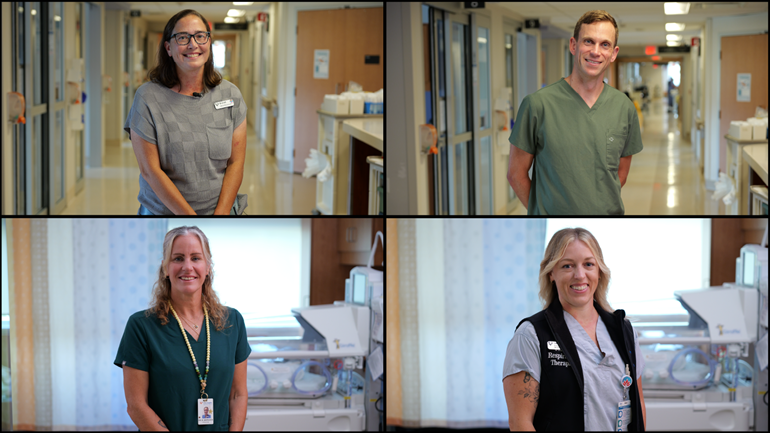
When one mother's son was born at just 24 weeks' gestation, she wasn't sure he would survive. Today, he is thriving thanks to the Tiny Baby Initiative Team at Surrey Memorial Hospital, whose innovative and collaborative approach is improving outcomes for Fraser Health's most vulnerable patients, earning them a Service Delivery Excellence Award.
When her son was born at just 24 weeks' gestation, Navkirat Kaur faced unimaginable uncertainty.
"We were not sure if he would survive," she recalls. "And now you can see him running, walking, talking. I always say he is alive because of them. They saved him."
Her son is one of many babies who have benefited from the specialized care provided through the Tiny Baby Initiative at Surrey Memorial Hospital's Neonatal Intensive Care Unit (NICU) where a multidisciplinary team is dedicated to improving outcomes for extremely premature infants.
"The tiny babies that we care for are some of the most vulnerable and fragile patients that Fraser Health cares for," says Dr. Nicholas Williams, head of the NICU department. "We're talking babies born at 22, 23, 24 weeks gestation."
Babies born under 28 weeks' gestation or weighing less than 1,000 grams are considered ‘tiny babies’ and require specialized care and protocols tailored to their unique needs.
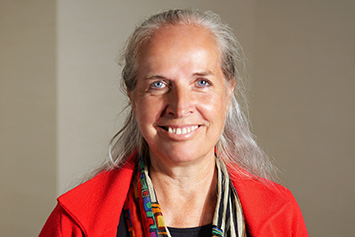
Founded and led by Neonatologist Dr. Rebecca Sherlock, the initiative was first implemented in 2019.
"When we realized back in 2019, that the numbers of the smallest of small were increasing, there was at that time a movement afoot internationally to treat the tiniest of tiny differently," explains Dr. Sherlock.
What began as a focused effort to improve outcomes for extremely premature infants has grown into one of Canada’s first comprehensive Tiny Baby Programs.
"We joined the International Tiny Baby Collaborative in 2025 as the first Canadian group, ensuring that global evidence informs local practice," explains Dr. Sherlock.
Learn more about the team’s inspiring work:
Through evidence-based practice and continuous quality improvement, the team identifies, tests and implements new approaches to care. In 2025, it formed 13 multidisciplinary subgroups focused on areas including nutrition, respiratory care, neurodevelopment and ethics.
"This effort spans all disciplines, from physicians to nursing staff to allied health to pharmacy, really all chipping in and implementing not just one, but a multitude of little bits of bundles of care to improve the outcomes for these tiny babies," explains Dr. Williams.
That spirit of collaboration has driven remarkable improvements in care. Through standardized care pathways, bedside tools, multidisciplinary reviews and ongoing quality improvement, the team has improved survival while reducing complications and harm for extremely premature infants.
"The work that's being done is really promoting the health and wellness of these babies," says Brandi Newby, pharmacy coordinator. "They're a very high-risk group for not surviving and not doing well. Improving outcomes is really significant."
Through the efforts of the initiative, survival rates increased while complications were reduced, even as the team cared for increasingly premature infants. More babies are receiving specialized care closer to home and returning home to their families with better outcomes.
"With the smallest of babies — our survival in those babies went up by anywhere between 10 and 20 per cent," says Dr. Sherlock.
But for the team, success is not only measured in statistics.
"We do the work that we do because we know that we're making a difference in the patients' and families' lives," says Dr. Sherlock.
The impact of that commitment is felt by families long after they leave the NICU.
"They are superheroes," says Navkirat. "The amount of work they do, the pressure they go through, they are superheroes."
Clinical Operations Manager Lunalee Inamac is proud of the team’s profound impact.
"It saves lives," she says. "More families are able to take their babies home."
The team is also sharing its learning through research, publications, conferences and national and international committees, helping advance neonatal care beyond Surrey Memorial Hospital.
For many team members, receiving a Service Delivery Excellence Award is meaningful recognition of years of dedication and innovation.
"To not only have made a difference in families’ lives, but now to be recognized is literally a dream come true," says Dr. Sherlock.
For Navkirat, the team's impact is reflected every day in her son.
"On his every birthday before God, I thank them," she says. "For making it possible, for giving me my bundle of joy."
By transforming care for some of Fraser Health's most vulnerable patients, the team is helping more babies survive and thrive while setting a new benchmark for neonatal care.
Congratulations to the Tiny Baby Initiative Surrey Memorial Hospital NICU Team – recipient of a Service Delivery Excellence Award.