Learn about preferred fonts and contrast.
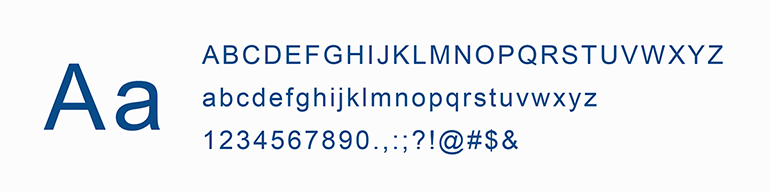
Arial (sans-serif)
- Use for most print and digital communications: emails, posters, postcards, presentations, web content.
- Arial is easiest to read on screens.
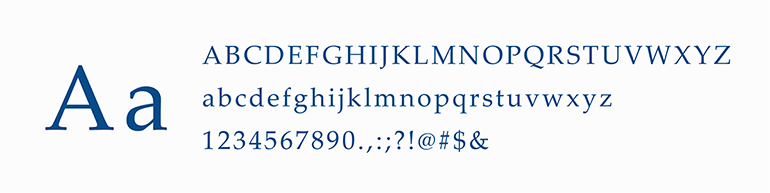
Palatino (serif)
- Use for long, printed, text-heavy documents: reports, letters, fact sheets, meeting minutes.
- More comfortable to read in print.
- Arial may be used for long documents if preferred.
BC Sans (sans-serif)
- Use for materials containing Indigenous characters and syllabics.
- Supports special characters and syllabics found in 34 main Indigenous languages in B.C.
- For long text blocks with Indigenous words, use BC Sans for the entire block.
- For single Indigenous words, replace the whole word with BC Sans, not individual characters.
- Accuracy check: All content created in an Indigenous language using BC Sans should be reviewed by a professional Indigenous-language translator to ensure accurate use and placement of syllabics and characters.
- Keyboard access: To type Indigenous characters and syllabics, you will need the language-specific virtual keyboard installed. Contact Service Desk for assistance with this process.
- Learn more about BC Sans.
Note: Arial, Palatino and BC Sans are available on all Fraser Health computers and devices.
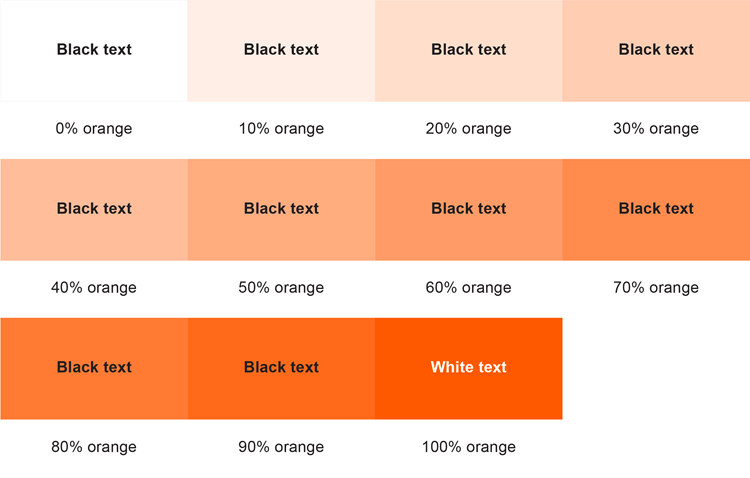
Contrast
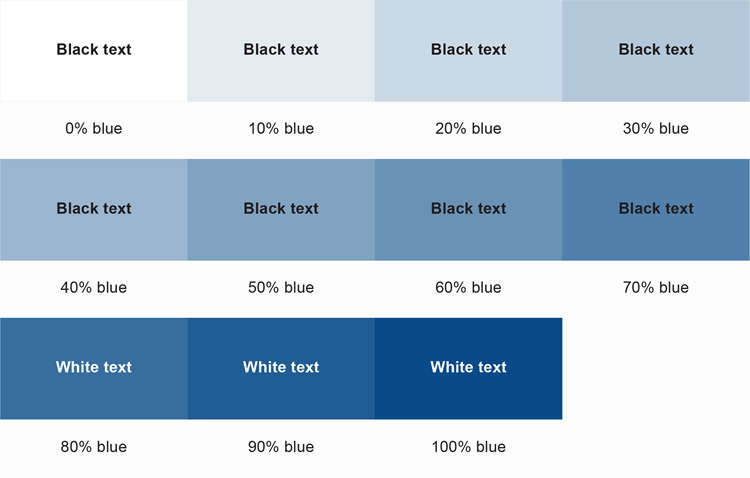
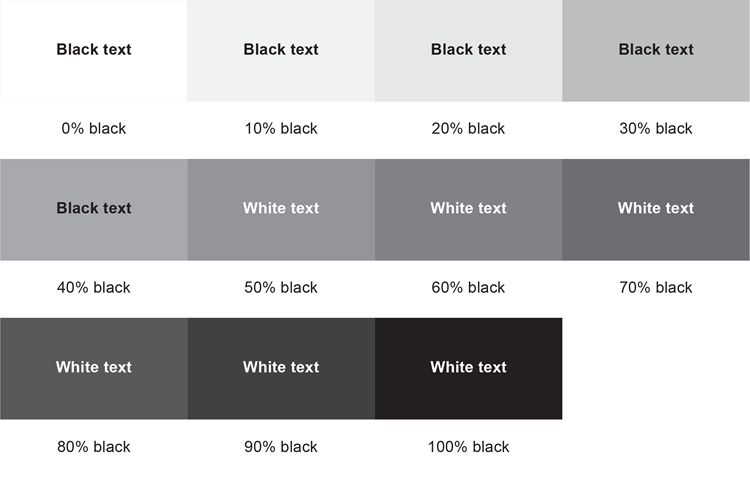
It is important all text has strong contrast for accessibility. Using strong contrast improves readability for individuals with vision disabilities like color-blindness and low-vision impairments. The diagrams below outline the best combinations of text and background colours.
Blue
Black
Orange