
Winter in the lower mainland, where it is often cold, dark or wet, presents some unique challenges for getting around safely. If you drive, make sure you and your vehicle are ready for winter with these tips.
Stay safe on the road
- Slow down in winter weather – posted speed limits are meant for ideal weather conditions. Do not use cruise control in poor conditions.
- Always use your low-beam headlights, especially in low light and low visibility conditions such as rain or fog.
- Slow down and stay alert for pedestrians and cyclists or for unexpected distractions, such as animals or debris on the road.
- Actively scan and watch for pedestrians at sidewalks, crosswalks and intersections.
- Leave extra space between you and others and allow for extra time to reach your destination.
- Ensure you have enough space between your car and the car ahead of you to be able to comfortably stop in time.
- In bad weather, check DriveBC.ca for up-to-date information on road conditions.
- Beware of standing water on the road which may obscure damaging potholes or may cause your vehicle to hydroplane and lose control.
Prepare your vehicle for winter
-
Check your tires
- Winter tires are required on most B.C. routes, especially outside of the Lower Mainland from October to April. Check specific routes on the Government of BC’s website.
- Make sure your tire’s tread has enough depth: Most tires have tread wear indicators, which are raised sections on the grooves of tires that become easier to see as the tread wears down.
- Example of tread wear indicators
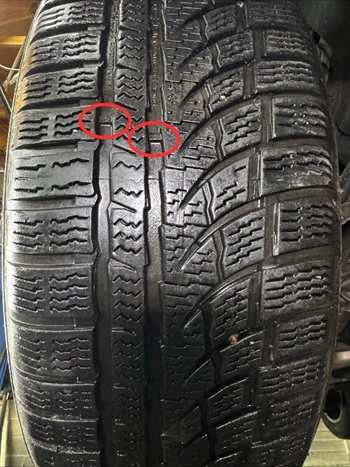
- If your tires don’t have indicators, use a tread depth gauge or look for uneven wear, bald spots or cracks in tires.
- You can also use a Canadian quarter or nickel. Insert the coin into the tread with the Queen’s head or the caribou’s nose facing down. If you can see the top of her head or the tip of the caribou’s nose, the tread is too low.
- Example of tread wear indicators
- Check your tire’s air pressure: Find the recommended pressure in your vehicle manual or the sticker on the driver’s door or door frame. The pressure engraved onto the tire itself is the maximum pressure.
- Use a tire pressure gauge to check. Many newer vehicles have alerts for low tire pressure.
- For the most accurate reading, check tire pressure when they are cold –before driving or a few hours after parking.
-
Inspect your lights
- Make sure every light on your vehicle is working properly – any burnt out bulbs should be replaced immediately.
- Set your headlights to the “full on” setting, so you can see clearly, and others can see you.
- Daytime or parking lights do not provide sufficient lighting in poor or low visibility conditions. With the “full on” setting, headlights, tail lights and side marker lights will be turned on to ensure visibility.
- Newer vehicles have an Auto lighting feature that only activates in low ambient light conditions, which can leave your tail or parking lights off and make your vehicle less visible to others.
-
Clean your windshield and wipers
- Clean both sides of your windshield regularly to help prevent dirt, grease or ice from building up. This helps avoid glare, streaks and blurs on your windshield that makes it difficult to see.
- Make sure your windshield vent isn’t blocked by car accessories – it helps defrost snow or ice outside of your vehicle, and prevent moisture build up inside.
- Replace wipers when they start to skip or squeak – opt for winter wipers and washer fluid so they still function at lower temperatures.
- Clear your vehicle of all snow and ice before starting to move.
- For your own safety and the safety of others on the road, it is very important that you remove snow and ice from all windows and mirrors, including the roof and hood of your vehicle. It is also required by law.
-
Check your battery
- Get your battery checked regularly, especially before or during winter. Low temperatures cause batteries to work harder and reduce performance.
- Recharge or replace your battery if it’s weak or dying frequently. Most modern vehicles will alert you when maintenance or a replacement is needed.
- You can also ask your mechanic or technician to test your battery and determine if you need a replacement.
-
Pack a winter emergency kit
Keeping a car emergency kit can help keep you safe and prepared in the case of a roadside emergency during winter. Some essential items to include are:
- Snow shovel/brush
- First aid kit
- Blankets
- Flashlights
- Non-perishable foods
- Reflective hazard triangles, to alert other drivers in the case of breakdowns
Get more tips on emergency kit items here.
|
Get ready for winter. Here’s how you can stay healthy and safe. Fall and winter wellness starts here. You can begin by getting flu and COVID-19 immunizations as well as practicing healthy habits. And if you need care, make sure to know your care options and book lab appointments online if you need them. Learn more: fraserhealth.ca/Setfortheseason. |