
Researchers, clinicians and people with lived experience came together in May to share work that is improving care across B.C.
For many people experiencing intimate partner violence, the impact of head injury or strangulation can go unseen and untreated.
For Five Days in May, an annual B.C. health research showcase, a Fraser Health nurse practitioner provided an overview of several studies exploring links between brain injury and intimate partner violence (IPV) in her presentation Beyond Brain Injury: Rethinking Diagnosis, Support and Recovery.
“Brain injury in this context is often unwitnessed, under-recognized and underdiagnosed,” says Jennifer Bellefontaine, nurse practitioner at the Embrace and HEAL Clinics. “Strangulation in particular often leaves no bruises or marks and continues to be a largely invisible act of violence.”
At Embrace Clinic, research is already shaping how care is delivered. The clinic is part of an international study aimed at improving the diagnosis of brain injury in survivors of intimate partner violence. The research will also explore connections between Alzheimer’s disease and related dementias.
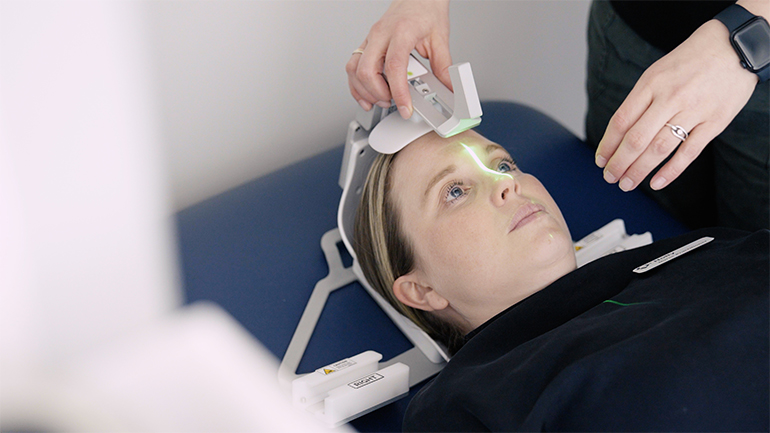
Clients who choose to participate in the study are providing blood samples that are analyzed at UBC to identify potential biomarkers of injury. The forensic nursing team at Embrace Clinic will soon add another layer to this research using transcranial Doppler technology, which measures how blood flows through the brain following head injury or strangulation.
“For now, this is a research project only,” says Holly McDonald, nurse practitioner. “However, the work we’re doing might eventually really help in diagnosing IPV-related brain injuries and may even have legal implications.”
Holly and her forensic nursing colleagues at Embrace Clinic and Surrey Memorial Hospital are incredibly grateful to the people who willingly participate in clinical research.
“Agreeing to take part in research like this is a deeply selfless act,” says Kara Delnea, nurse at Embrace Clinic. “Many of the people we care for have experienced significant trauma, yet they are willing to take part in studies that may change health care down the road and outcomes for other survivors of intimate partner violence, and that is truly commendable.”
Watch: Hannah Varto, nurse practitioner, Holly McDonald, nurse practitioner and Kara Delnea, nurse, demonstrate how a transcranial Doppler works
Learn more: Five Days in May