

Fraser Health launched a pilot project in late 2023 to embed peer support workers in the Emergency Department of Chilliwack Hospital, with a goal of supporting patients by addressing harms related to the toxic drug supply.
(Photo) Janelle Tarnow, study lead and nurse educator; Tracy Stoneson, manager, Emergency Department, Chilliwack General Hospital; Jessica Preston, manager, Clinical Operations
As we mark the 10th anniversary of the toxic drug public health emergency in B.C., a peer-reviewed article in the Canadian Journal of Emergency Nursing finds that peer support workers are not only having a positive impact on patient care at Chilliwack General Hospital, but they are also boosting staff morale and reducing workload stress.
Exploring the role of peers in addressing the toxic drug crisis in emergency departments captures the experiences of patients, staff and peers themselves.
Emergency Department nurses interviewed for the study say the presence of peer support workers allows them to focus more on their clinical duties because the peers provide one-on-one patient support—including witnessed consumption outside of the hospital—and connections to community resources.
“The peer support program has exceeded expectations,” says Janelle Tarnow, study lead author and nurse educator. “The peers are an integral part of the Chilliwack Hospital family. They’re helping patients feel safe, seen and cared for, and they’re supporting staff which results in better patient care.”
Eighty per cent of patients surveyed say they feel safer and more supported with peer support workers present.
“When people who use substances come to the hospital, they often feel judged,” says Kim Wood, peer support worker. “I let them know that I’m here to help and I know what they’re going through because I’ve been there.”
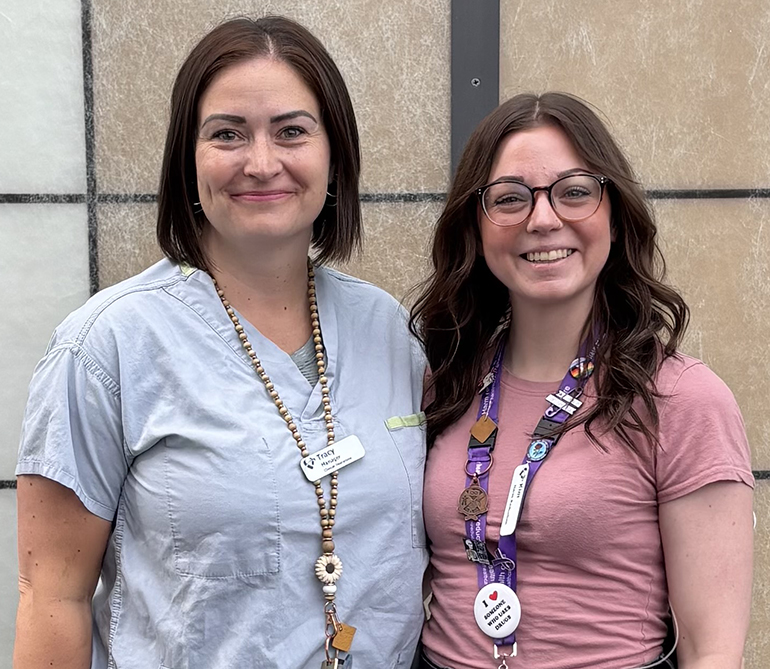
(Photo) Tracy Stoneson, manager, Emergency Department, Chilliwack General Hospital, and Kim Wood, peer support worker, Chilliwack General Hospital
Peer support workers like Kim bring a resume of lived experience to their roles. They work closely with Emergency Department staff and medical staff to provide social and emotional support to people who use substances. They also facilitate access to emergency care and discharge into the community. Their presence helps in de-escalating situations that might arise to ensure people seeking emergency care can navigate the health system safely.
“I’ve met with people across the province who are looking at the Chilliwack model and considering embedding peers in their Emergency Department teams,” says Janelle. “Being able to talk about the program’s success and now having the data and evaluation from this article is a testament to the work of Kim and other peer support workers at Chilliwack General Hospital.”
Janelle would like to extend special kudos to Kim Wood, peer support worker and co-author on the study, along with Mary Van Osch from the Fraser Health Emergency Department Network, Jade Black and Rita Russell from Toxic Drug Response and Priority Populations, Tracy Stoneson, emergency department manager, Chilliwack General Hospital, and Aven Sidhu, lead, Quality Improvement and Patient Safety, for providing essential guidance throughout the process.
“This truly was an example of team collaboration at its best,” says Janelle. “I am incredibly proud of what we’ve achieved on the ground and in research.”