
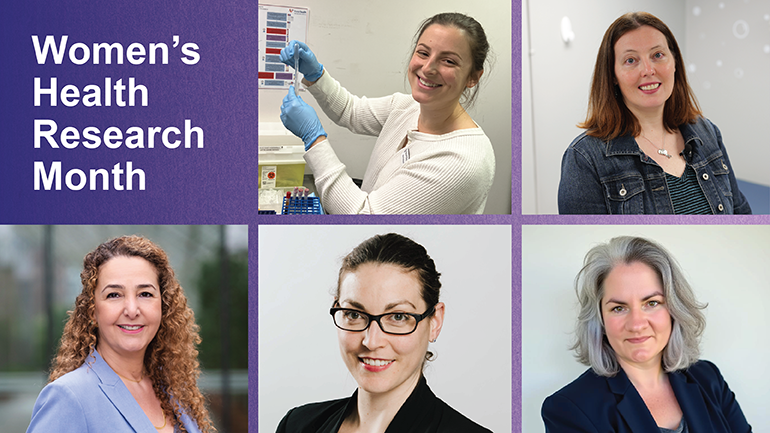
March is Women’s Health Research Month in B.C. The goal is to elevate research focused on women, girls and gender-diverse people.
(Photo) Women’s Health Research Month.
March 2026 marks the first Women’s Health Research Month in B.C.
The province-wide initiative is an opportunity to shine a light on the gender gap in health research and to celebrate the researchers and care providers working to improve health outcomes for girls, women and gender-diverse people across B.C.
According to the BC Women’s Health Foundation—which advocated for Women’s Health Research Month—only seven per cent of national health research funding is directed to women’s health research.
By increasing awareness of the need for more research into women’s health issues, it’s hoped that more dedicated research funding will follow.
The proclamation for Women’s Health Research Month acknowledges that girls, women and gender-diverse people, including two-spirit, trans and non-binary people have specific health needs and are under-represented in research.
The Department of Evaluation and Research Services at Fraser Health is dedicated to equitable research, with equity, diversity and inclusion as central themes in research. Approximately 40 per cent of all principal investigators are women and 107 of 278 active studies at Fraser Health are led by women.
“I’m incredibly proud to be a researcher myself and recognize the women researchers at Fraser Health whose work is helping close research gaps and strengthen care across our communities,” says Kate Keetch, director, Evaluation and Research Services, Fraser Health.
Examples of women’s health research in our region include:
- Nurse Practitioner (NP) Hannah Varto, along with colleagues NP Shona Phillips, NP Holly McDonald, NP Jennifer Bellefontaine, NP Djari Diallo-Nelson and Registered Nurse Kara Delnea are collaborating with UBC on a research study aimed at characterizing the incidence of brain injury resulting from interpersonal violence among clients at Embrace Clinic.
- Dr. Lynn Farrales led a community-based participatory project to support women and families after stillbirth within Fraser Health.
- Dr. Kirsten Niles is comparing long-read whole genome sequencing with current standard testing to improve diagnosis, patient experience and cost-effectiveness for serious genetic conditions in infants and during pregnancy. She is also the co-primary investigator on a study examining the longer-term cost consequences of caesarean delivery in Canada.
- Dr. Fariba Mohtashami is the Fraser Health lead in a Canadian randomized controlled trial assessing a new vaginal surgical technique to correct pelvic organ prolapse in women.