
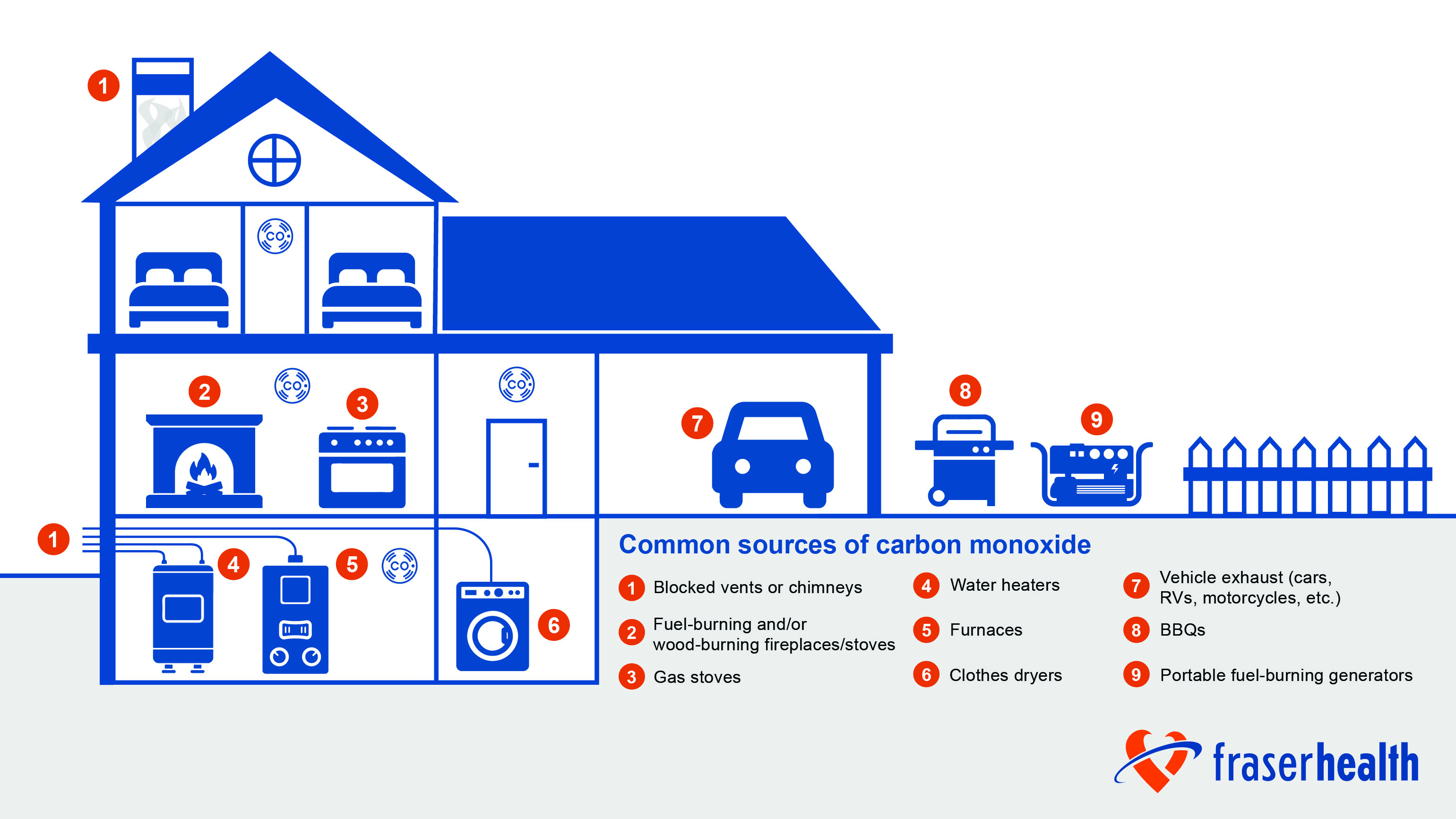
As the weather gets colder and people close windows and start using heating sources to stay warm, the potential for carbon monoxide (CO) poisoning increases.
Every year, hospital Emergency Departments treat cases of carbon monoxide poisoning which can cause serious illness and death.
Between January 1, 2018, and October 31, 2024, there were 654 visits to Fraser Health Emergency Departments for carbon monoxide poisoning. Since 2012, carbon monoxide poisoning has caused more than 120 deaths in B.C.
“Anyone can be affected by carbon monoxide poisoning,” says Dr. Carolyn Wonneck, Medical Health Officer, Fraser Health. “Symptoms can start slowly or come on quickly. Sometimes several people in the household are affected at the same time.”
Symptoms of carbon monoxide may mimic the flu—without the fever—or other health conditions and can include:
- Dizziness
- Shortness of breath
- Fatigue
- Nausea or vomiting
- Chest pain
- Confusion
- Headache
Carbon monoxide is an odourless, tasteless, invisible gas that comes from burning fuels like natural gas, propane, gasoline, oil, or wood. If fuel-burning appliances malfunction or aren’t venting properly, carbon monoxide levels can build up in your home.
Carbon monoxide levels can also rise if you run outdoor appliances such as propane heaters, fire rings, generators, and lawnmowers, or idle a vehicle in enclosed spaces like a shed or garage; this can occur even if you leave the door open.
Carbon monoxide is impossible to detect without an alarm. Having a Canadian-certified carbon monoxide alarm on every floor of your home and at least one near bedrooms is a potentially life-saving action. The alarms should be tested monthly, with batteries replaced as needed.
“If your carbon monoxide detector alerts, or if you experience symptoms you think are due to carbon monoxide, go outside immediately and call 9-1-1,” says Dr. Wonneck.
To better understand who is most at risk of carbon monoxide poisoning and how to prevent it, Fraser Health and Technical Safety BC analyzed the 654 cases in our region. Most cases occurred in adults aged 25–64 years and between October and March.
"The majority (84 per cent) of the carbon monoxide incidents reported to us occurred in single-detached homes where homeowners were responsible for appliance maintenance, including homes with rental units,” says Jackie Yip, Leader, Safety System Risk, Technical Safety BC. "Renters and people living with income and housing insecurity may be especially at risk from inadequate appliance maintenance and incorrect installation. While landlords have a legal responsibility to maintain gas appliances, everyone should install a carbon monoxide alarm. This simple, affordable precaution can save lives.”
It's important to correctly install, use and maintain furnaces, fireplaces, waters heaters, stoves and other heat-generating appliances. Landlords and homeowners should schedule annual inspections with a licensed gas contractor to keep appliances safe, properly vented and up to code. Outdoor fuel-burning appliances, like barbeques or camping stoves, should never be used indoors, even during a power outage.
Learn more about preventing carbon monoxide poisoning:
Carbon Monoxide Poisoning | HealthLink BC
Home and community safety program brochures and resources
About Fraser Health:
We recognize that Fraser Health provides care on the traditional, ancestral and unceded lands of the Coast Salish and Nlaka’pamux Nations and is home to 32 First Nations within the Fraser Salish region.
Fraser Health is dedicated to serving all Indigenous peoples, and honours the unique cultures of the First Nations, Métis and Inuit living within the Fraser Salish region.
Our hospital and community-based services are delivered by a team of 50,000+ staff, medical staff and volunteers dedicated to serving our patients, families and communities.
About Technical Safety BC:
Technical Safety BC is an independent, self-funded organization that oversees the safe installation and operation of technical systems and equipment. In addition to issuing licences, certificates, and permits it works with industry to reduce safety risks through assessment, research, education and outreach, incident investigations, and enforcement. For more information, visit www.technicalsafetybc.ca.