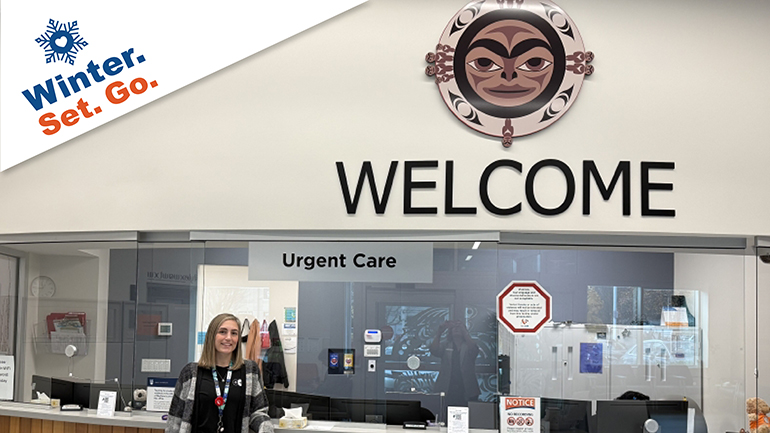
Lacey Burnett, a registered nurse at the Chilliwack Urgent and Primary Care Centre, plays an important role in assessing patients and offering guidance on care at home to help families manage symptoms during respiratory illness season.
Photo: Lacey Burnett, registered nurse, Chilliwack Urgent and Primary Care Centre
Lacey Burnett knows how stressful it can be when your child gets a respiratory illness. As a registered nurse with ten years of experience, she’s seen how distressing those moments can be for parents, when all you want is for your child to feel better fast.
“When there’s a medical concern, such as a respiratory illness, some people’s instinct is to visit the emergency department,” says Lacey. “But most respiratory illnesses can be safely treated without a visit to the hospital, and choosing appropriate community care options helps keep hospitals available for those who need them most.”
Watch: Tips on how to keep your kids healthy and what to do if they get sick.
Lacey recommends starting with your own family doctor or nurse practitioner if you have one. “They know your health history and might have same- or next-day appointments for urgent concerns.”
Urgent and Primary Care Centres (UPCCs) provide care for urgent, non-emergency medical concerns that need attention within 12 to 24 hours.
If your health concern is not urgent, or if you need help deciding what type of care is most appropriate, Fraser Health Virtual Care registered nurses can assess symptoms virtually and, if needed, connect you with the right services—such as UPCCs.
Winter is an especially busy time for the health system. That’s where UPCC nurses make a difference—assessing each patient, recommending home treatment when appropriate and ensuring those with the most urgent medical concerns are seen first. “We may also direct patients to other care options, whether that means visiting a pharmacist, the emergency department or another community resource,” says Lacey.
“Respiratory illnesses are the most common concern during winter. A little over half of patients at our UPCC need to be seen by a doctor or nurse practitioner based on their symptoms. Others can manage their symptoms at home with a nurse’s assessment and recommendations.”
“While it’s important to know what to do when you’re sick, it’s just as important to prevent illness in the first place. Practicing simple habits—like handwashing—lowers your risk of illness and the likelihood of needing urgent or emergency care, ensuring care options remain available for those who need them most,” says Lacey. Vaccines are also a powerful and effective way to protect people and communities.
For more information on accessing services at one of Fraser Health’s Urgent and Primary Care Centres, visit fraserhealth.ca/upcc.
Get in touch with a Fraser Health Virtual Care registered nurse or dietitian via phone or webchat at fraserhealth.ca/virtualcare.
Winter wellness starts here: fraserhealth.ca/WinterSetGo.